Free · No sign-up · Runs in your browser
Body Type CalculatorFind your body shape from three measurements
Enter your bust, waist and hips to get your shape — hourglass, pear, apple, rectangle or inverted triangle — with a clear, step-by-step explanation of why.
3 inputs
Bust, waist, hips
5 shapes
Documented rules
Private
Nothing saved
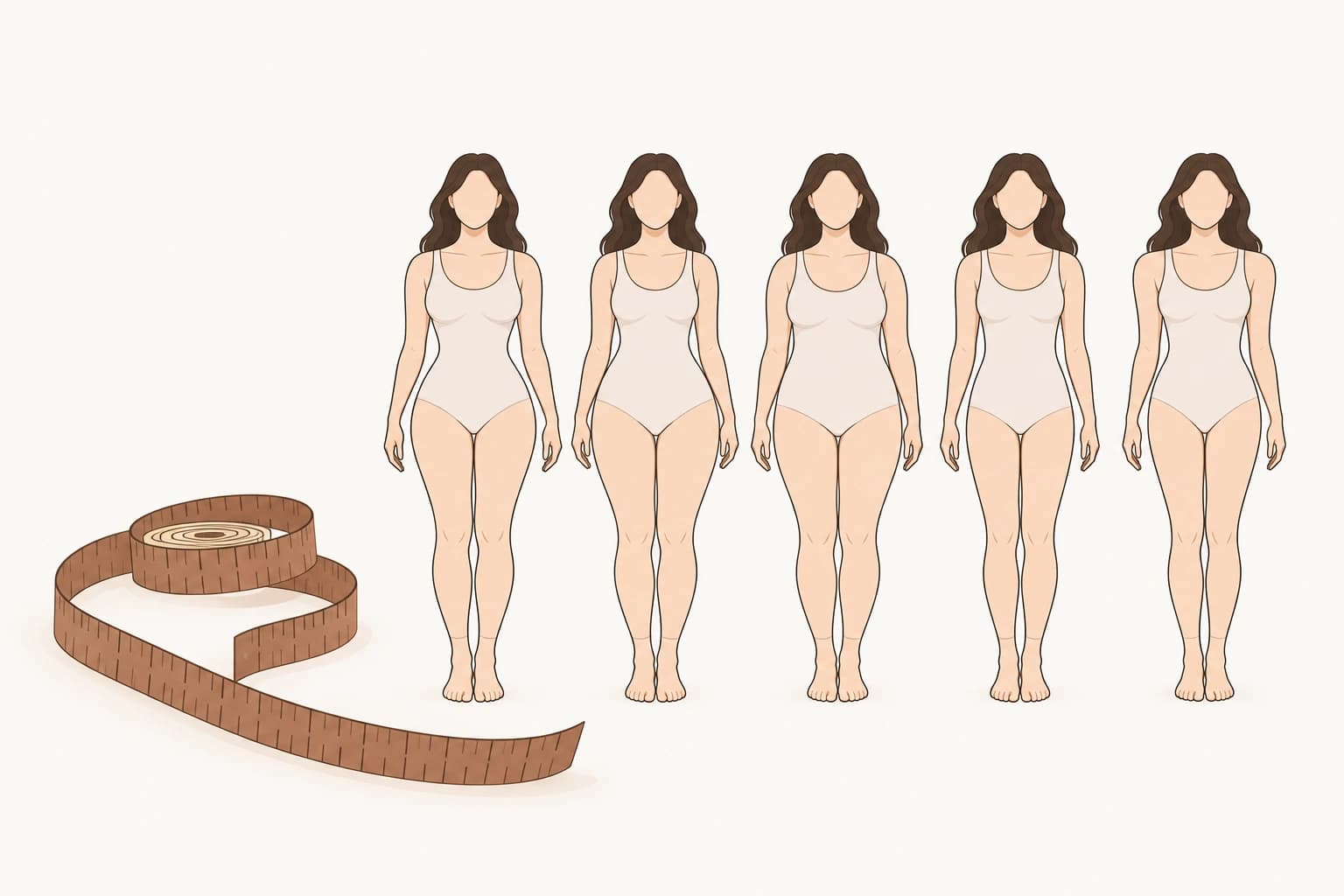
What this body type calculator does
The calculator compares three body measurements with each other and places the result into one of five broad body-shape categories. It looks at two things: whether your bust and hips are balanced or one is noticeably larger, and how defined your waist is compared with them. In that sense it is a simple body measurements calculator: three numbers in, one clearly explained shape out.
Body shape categories are mostly used as a starting point for clothing fit and style. They describe proportions only. They do not measure size, weight, fitness or health, and no shape is better than another.
How to use the body type calculator
- 1Choose inches or centimeters to match your tape measure.
- 2Measure your bust, waist and hips while standing relaxed, and enter each number.
- 3Select “Calculate my body shape” to see your result and the reasons behind it.
- 4Edit any measurement and recalculate, or reset the form to start again.
Which measurements you need
You need a flexible tape measure and about five minutes. Measure over light clothing or underwear, and stand with your feet together.
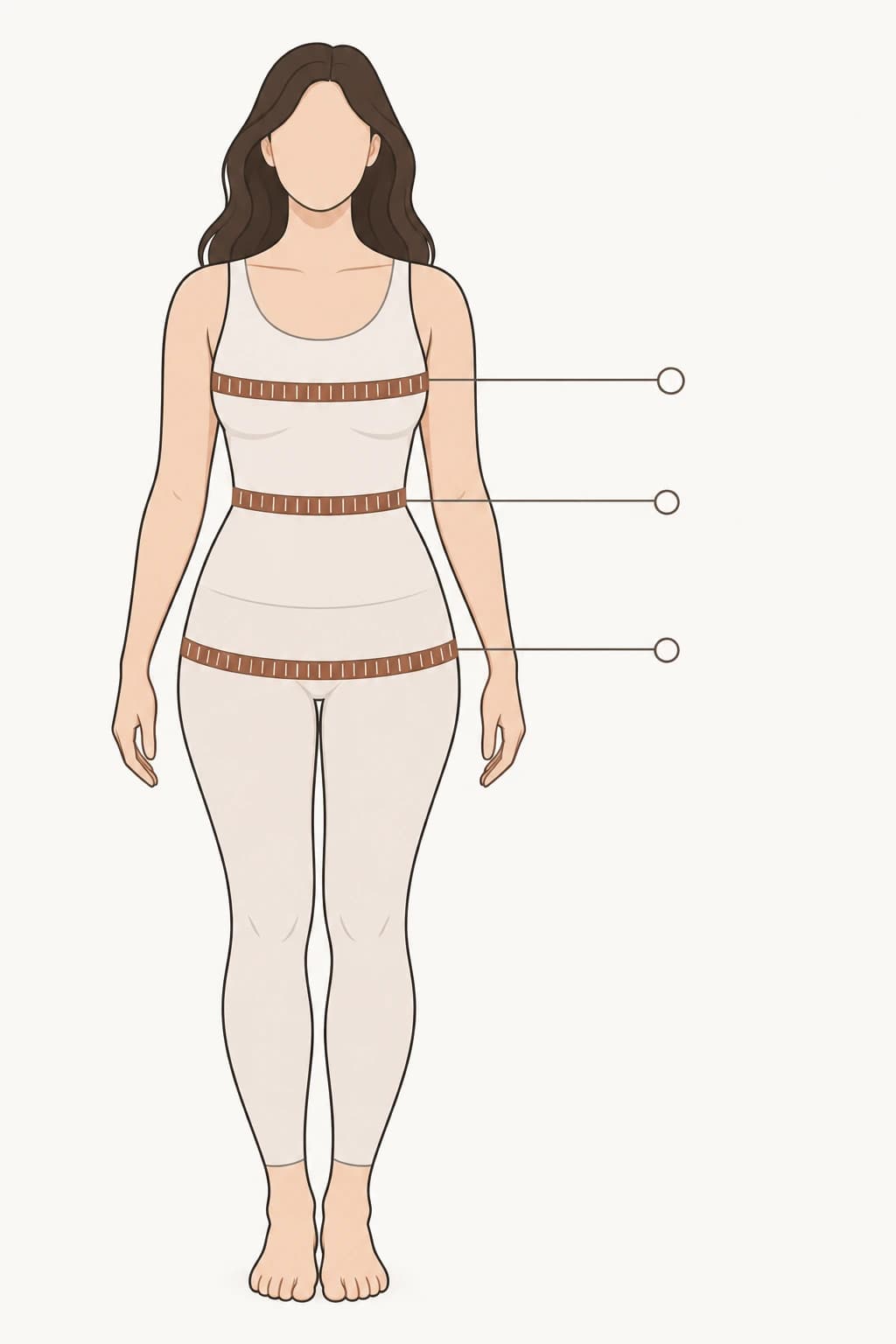
Bust
Around the fullest part of your chest, with the tape level across your back. Wear a non-padded bra for a consistent reading.
Waist
Around your natural waist — usually the narrowest part of your torso. Breathe out normally and don’t pull the tape tight.
Hips
Around the fullest part of your hips and seat, keeping the tape parallel to the floor. This is usually lower than the hip bones.
How your body type is determined
The calculator checks the rules below in order and returns the first one that matches. The bust–hip and waist thresholds are adapted from the Female Figure Identification Technique (FFIT), a shape-sorting method published in apparel research. The apple rule is our own simplification, because FFIT describes round shapes differently.
These thresholds are conventions for sorting measurements, not medical or scientific standards. After calculating, the tool also checks whether a change of about 1 in (2.5 cm) in any one measurement would give a different shape, and tells you if your result is borderline.
| Order | Result | Rule |
|---|---|---|
| 1 | 1. Apple | Waist is within 2 in (5.1 cm) of both bust and hips, or larger than them. |
| 2 | 2. Hourglass | Bust and hips differ by less than 3.6 in (9.1 cm), and the waist is at least 9 in (22.9 cm) smaller than the bust or 10 in (25.4 cm) smaller than the hips. |
| 3 | 3. Pear | Hips are at least 3.6 in (9.1 cm) larger than the bust. |
| 4 | 4. Inverted Triangle | Bust is at least 3.6 in (9.1 cm) larger than the hips. |
| 5 | 5. Rectangle | None of the above: bust and hips are balanced and the waist is smaller, but not by enough for Hourglass. |
Worked example: how to calculate your body type by hand
You don’t need to trust a black box. Here is exactly what the body type calculator does with one set of measurements. You can follow the same steps with your own numbers and a piece of paper.
- 1
Work out the three differences
- Hips − bust: 41 in − 38 in = 3 in
- Bust − waist: 38 in − 30 in = 8 in
- Hips − waist: 41 in − 30 in = 11 in
- 2
Is the waist close to both bust and hips? (Apple)
No — the waist is 8 in smaller than the bust, more than the 2 in apple margin.
- 3
Are bust and hips balanced, with a defined waist? (Hourglass)
Bust and hips differ by 3 in, under 3.6 in, so they are balanced: Yes. The waist is only 8 in smaller than the bust (below 9 in), but it is 11 in smaller than the hips, which meets the 10 in rule. Only one of the two waist checks needs to pass: Yes.
The five body shape results
Each result has its own guide with the measurement pattern, worked examples, common misconceptions and answers to frequent questions.
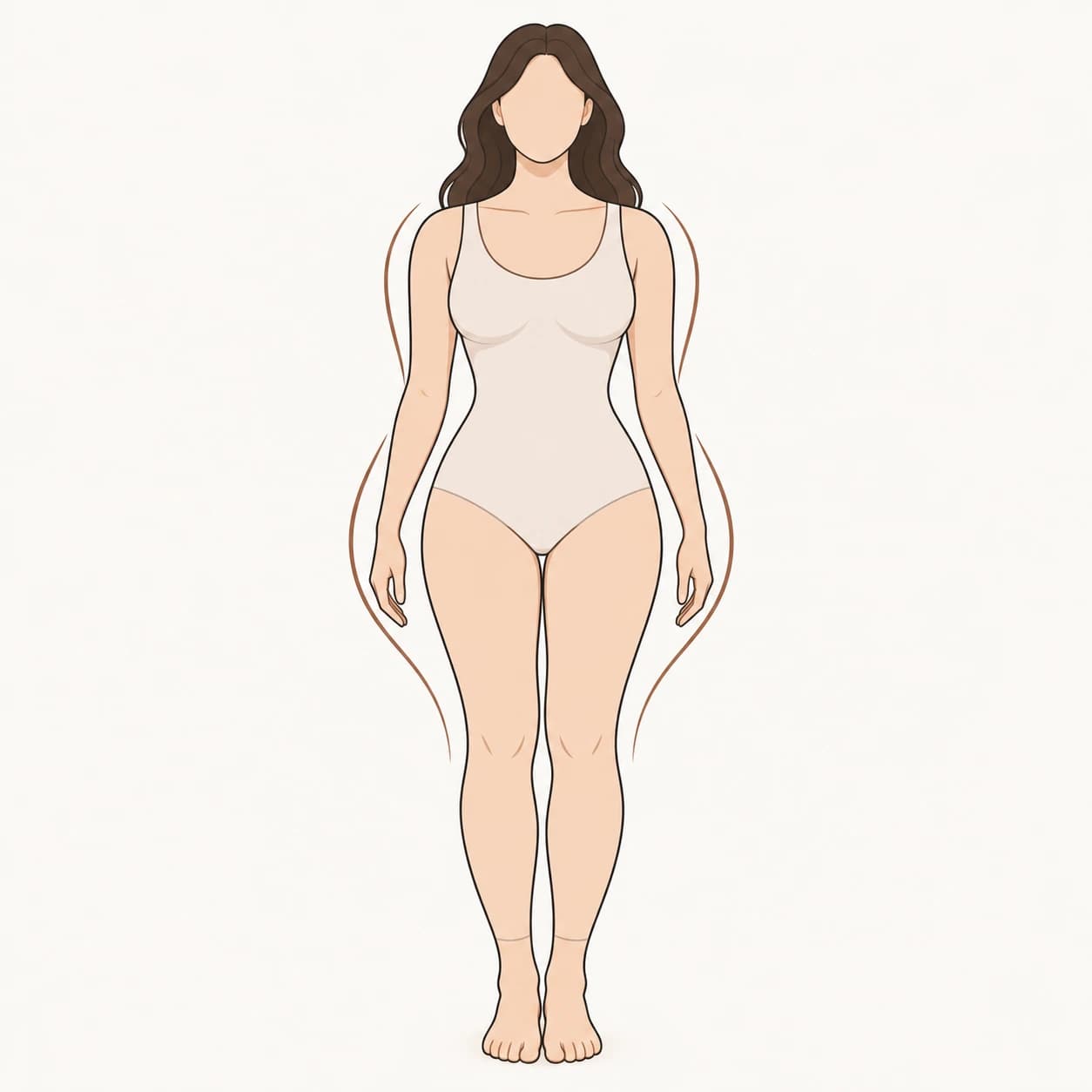
Hourglass body shape
An hourglass body shape describes bust and hip measurements that are close to each other, with a waist that is noticeably smaller than both.
Read the hourglass guide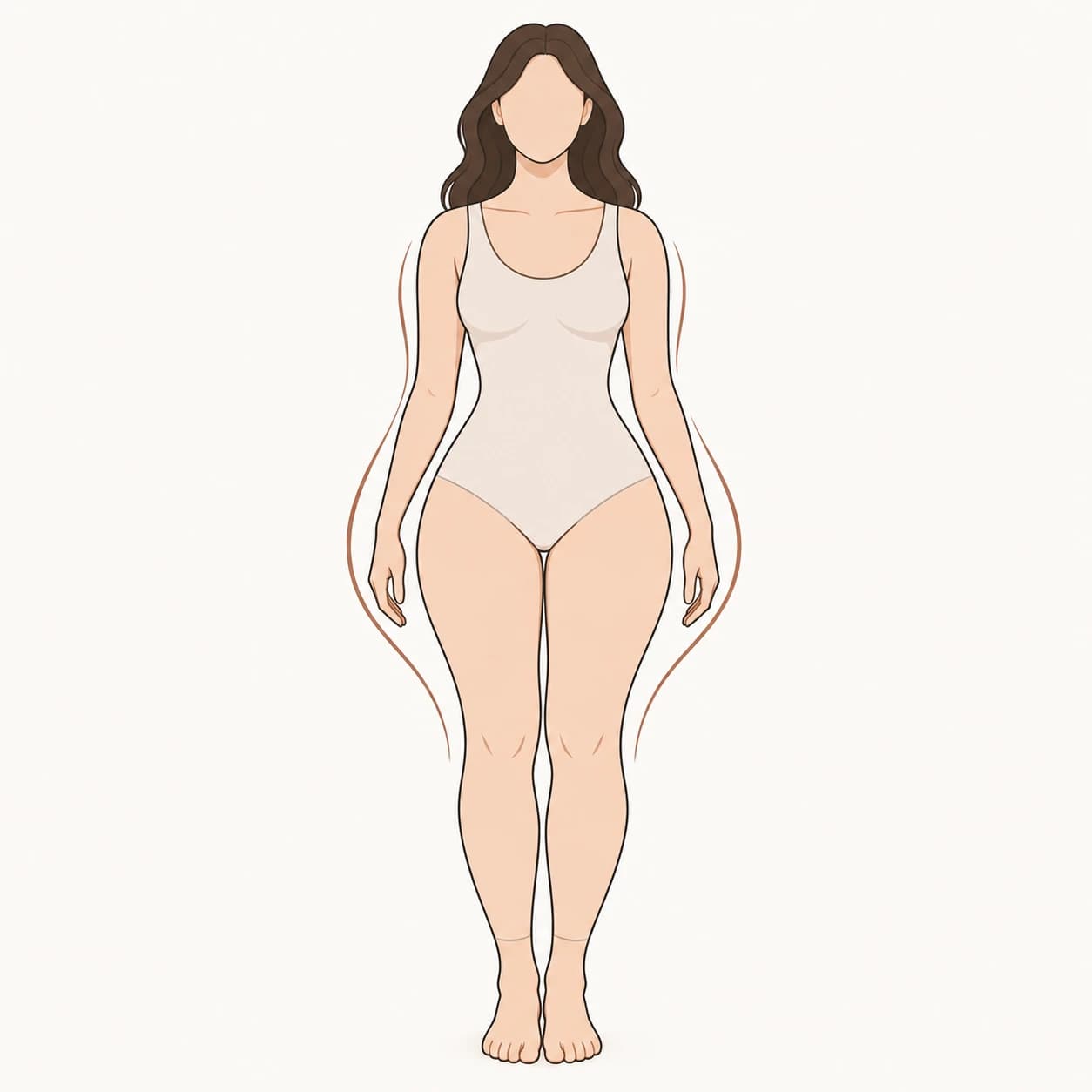
Pear body shape
A pear body shape — also called a triangle or spoon shape in some systems — describes hips that are noticeably larger than the bust.
Read the pear guide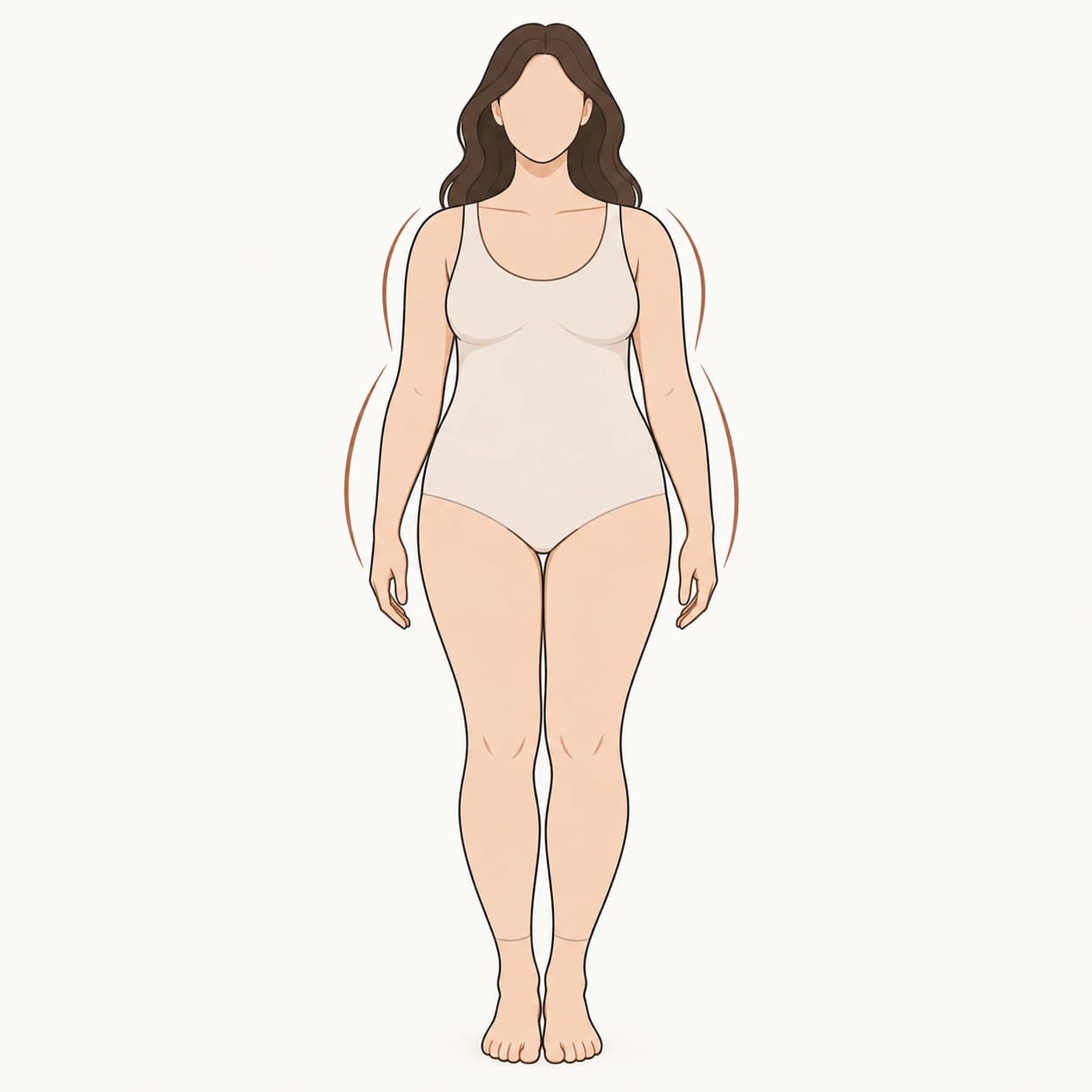
Apple body shape
An apple body shape — sometimes called round or oval — describes a waist measurement that is about the same as, or larger than, both the bust and the hips.
Read the apple guide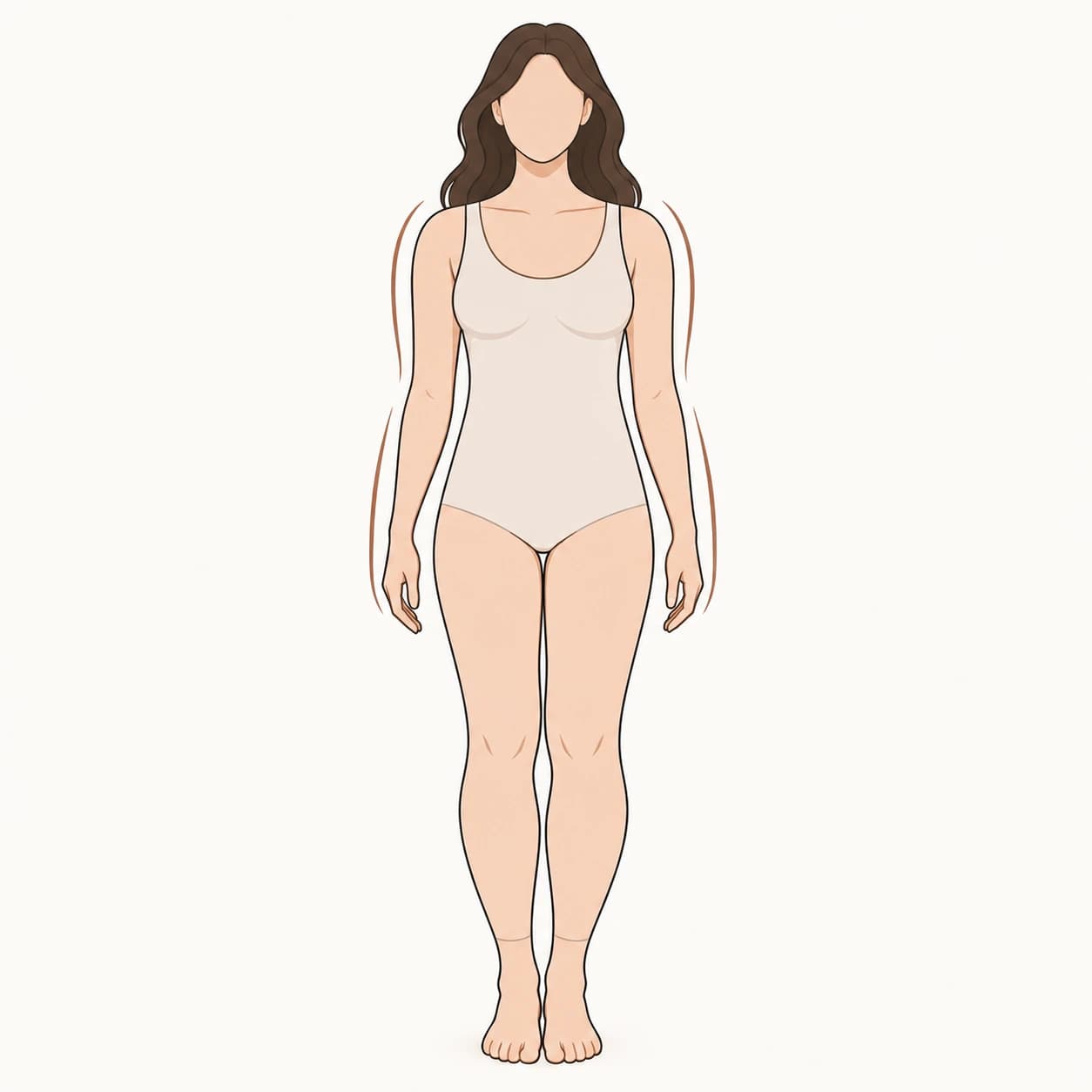
Rectangle body shape
A rectangle body shape — also called straight, column or banana — describes bust and hips of similar size, with a waist that is smaller but not dramatically so.
Read the rectangle guide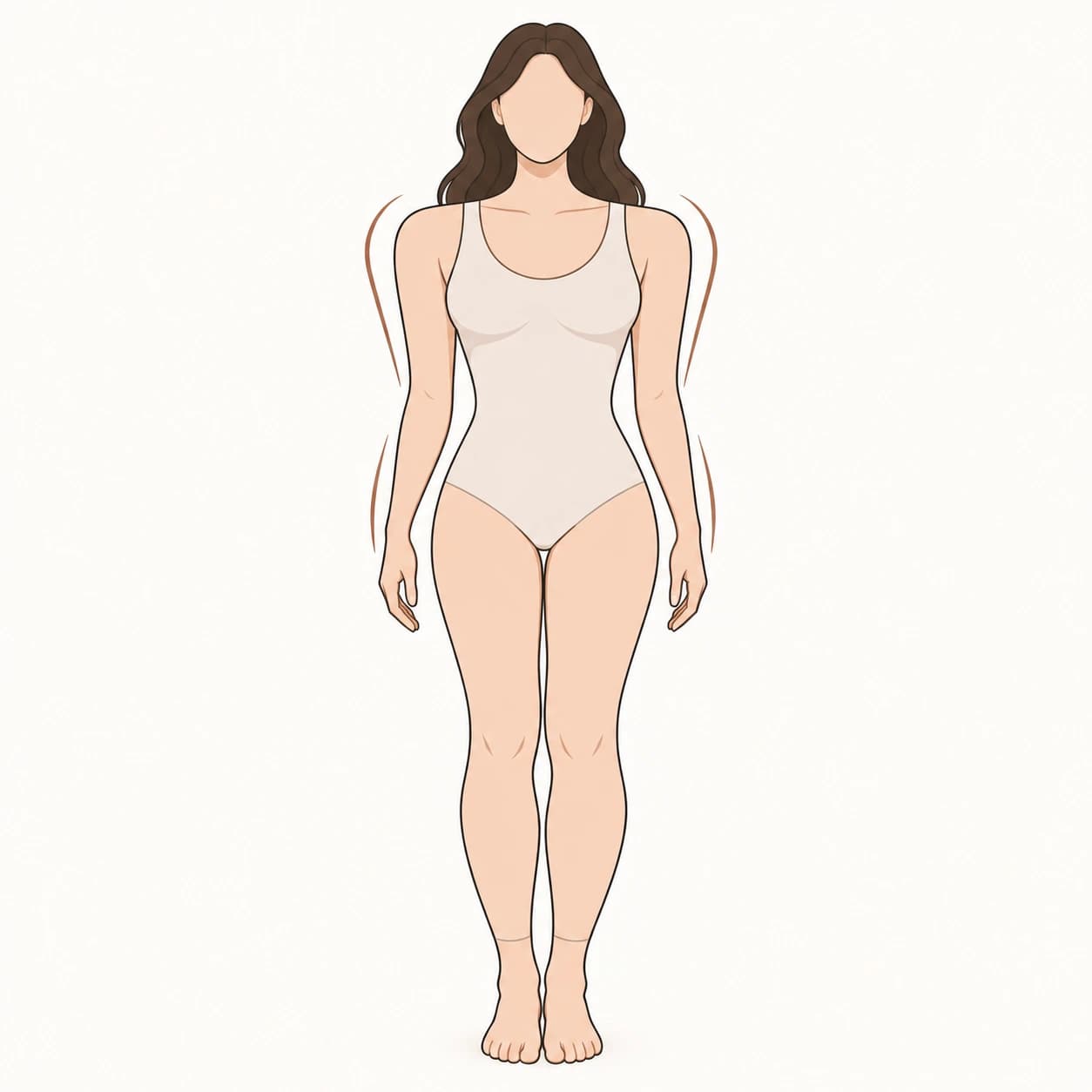
Inverted Triangle body shape
An inverted triangle body shape describes an upper body — measured here at the bust — that is noticeably larger than the hips.
Read the inverted triangle guide
Body type calculator vs. body type test or quiz
Searching for “what is my body shape” turns up two very different kinds of tools. A body type test or quiz asks you to pick pictures or answer questions such as “where do you tend to gain weight?” A body type calculator uses tape measurements instead.
| Aspect | Measurement calculator | Quiz or visual test |
|---|---|---|
| Input | Bust, waist and hip measurements | Answers about appearance, clothing fit or pictures |
| Repeatable | Same numbers always give the same result | Answers can change with mood or how a question is read |
| Transparent | Rules can be shown and checked by hand | Scoring is usually hidden |
| Main weakness | Depends on measuring correctly; no shoulder width | Self-perception is often inaccurate |
Neither is “right” for everyone. If you can measure, a calculator gives a result you can check and repeat. A quiz can be a useful second opinion, especially on shoulder width, which three circumferences can’t capture.
Body shape is not the same as ectomorph, mesomorph or endomorph
“Body type” is also used in fitness to mean somatotypes — ectomorph, mesomorph and endomorph. That system, introduced in the 1940s, describes overall build (how lean, muscular or rounded a body looks), not the proportions between bust, waist and hips. Its original claims linking build to personality are not supported by modern science.
This calculator does not estimate a somatotype, body fat or muscle mass. Two people with the same body shape — say, two pears — can have very different builds, and the same person keeps roughly the same shape pattern across a range of body weights.
What you can use your body shape result for
Comparing size charts
Brands size garments from bust, waist and hip measurements. Knowing which of your three is relatively largest tells you which column of a size chart to check first.
Choosing sewing patterns
Many sewing patterns are drafted for a standard bust–waist–hip difference. Your result shows whether you are likely to need to grade between sizes.
Reading fit and style advice
Style guides are usually organized by body shape. Knowing your category — and whether you sit near a boundary — helps you find advice that applies to you.
Tracking proportions, not weight
Some people like to note their measurements over time. The shape result is a simple way to describe proportions, but it is not a measure of health or progress.
Most of these uses come from women’s apparel sizing, which is why tools like this are often called a female body shape calculator. Whatever you use it for, keep your three numbers — they are more useful than the label on its own.
Factors that can affect your result
Where you place the tape
Measuring the hips at the hip bones instead of the fullest point, or the waist at the belly button instead of the natural waist, changes the numbers and can change the result.
Tape tension and posture
A tight tape, holding your breath, or standing with your weight on one leg can shift a measurement by an inch or more.
Clothing and underwear
Thick clothing adds bulk. A padded, minimizing or sports bra changes the bust measurement noticeably.
Time of day
The waist in particular can vary through the day with meals and breathing. Measuring at a similar time gives more comparable results.
Limitations of body shape calculations
- Bodies are continuous; categories are not. Many people sit between two shapes, and a single label can’t describe everyone accurately.
- Different methods disagree. Other calculators use different thresholds, more categories, or extra measurements such as high hip or shoulders. Research on FFIT found that small differences in where measurements are placed can put the same body into different categories.
- Shoulders are not measured. This method uses the bust as the upper-body measurement, so it cannot detect broad or narrow shoulders.
- Designed around female figures. The thresholds come from women’s apparel research. Anyone can use the calculator, but the categories may be less meaningful for other bodies.
- Not a health tool. The result does not assess health, body composition or risk.
Frequently asked questions
How does the body type calculator work?
It compares three circumferences — bust, waist and hips — against fixed thresholds. The bust–hip difference decides whether your upper and lower body are balanced, and the waist difference decides how defined your waist is. The combination maps to one of five shapes.
Is the calculator accurate?
The calculation itself is exact for the numbers you enter, but body-shape categories are simplified descriptions. Results depend on how and where you measure, and different methods can classify the same measurements differently.
Are my measurements saved or sent anywhere?
No. The calculation runs in your browser. Measurements are not sent to a server, not saved in browser storage, and are cleared when you reset the form or leave the page.
Can men use this body shape calculator?
Anyone can enter measurements, but the thresholds are adapted from research on women’s apparel sizing, so the categories are designed around female body shapes and may be less meaningful for other bodies.
Do I need to measure my shoulders?
No. The method uses bust, waist and hips only. That also means it cannot detect shoulder width, which some other guides use to identify an inverted triangle.
Is this body type calculator free?
Yes. It is free to use as often as you like, with no account, sign-up or download. There are no paid features.
Is a body type calculator the same as a body type test?
Not quite. A calculator uses tape measurements and fixed rules, so the same numbers always give the same result. A body type test or quiz relies on your answers about how you look, which is quicker but less consistent.
Will the calculator tell me if I’m an ectomorph, mesomorph or endomorph?
No. Those are somatotypes, a separate system describing overall build. This calculator describes proportions between bust, waist and hips only.
Can I calculate my body type in centimeters?
Yes. Select “Centimeters” above the measurement fields. Values you have already typed are converted automatically.
Use your result as a starting point
Your body shape is one way to describe your proportions — useful when comparing size charts or reading fit advice, but never a verdict on your body. If your result was close to a boundary, read both shape guides and see which description fits you better.
References
- Simmons, K., Istook, C. L., & Devarajan, P. (2004). Female Figure Identification Technique (FFIT) for apparel. Part I: Describing female shapes. Journal of Textile and Apparel, Technology and Management, 4(1), 1–16.
- Parker, C. J., Gill, S., Harwood, A., Hayes, S. G., & Ahmed, M. (2021). Assessing the female figure identification technique’s reliability as a body shape classification system. Ergonomics, 64(8). doi.org/10.1080/00140139.2021.1902572